When you think about keeping farm animals, you probably think about what they produce: chickens for eggs, bees for honey, goats for milk and cheese. But that's not how most of the animals on our farm got here.
At Moxie Farms, bringing in a new animal almost always starts with a problem: flies bothering the cows, brush swallowing a fence line, beetles chewing through the berry canes. Instead of reaching for a spray, we ask: “Is there an animal that would take care of this for us, and what else could it help with while it’s here?” Whatever it produces for the table usually comes second.
That way of thinking comes from watching nature, where grazers, browsers (animals that eat leaves, shrubs, brush, and woody plants), predators, insects, and other creatures all work together to keep their ecosystem in balance.
Much of what we do is an attempt to recreate that balance on the farm. Every animal here has at least one job, and most have several. Those jobs overlap so each one's work makes life easier for the next.
So let's meet the crew, starting where most of the work happens: out on the pastures.
How our pastures work
Think of our pastures as a big wagon wheel, divided into wedges. The only permanent fence on the farm runs around the outside edge. Inside it, we use electric fencing that we can move around, so each grazing area can be as big or as small as it needs to be that day.
The animals don't all graze together. They move around the wheel in groups, one wedge at a time, each group following the one before it:
First come the mama cows, either about to give birth or already raising a calf.
Next come the heifers (young cows that haven't had a calf yet), sharing the space with our sheep and goats.
Then come the birds.
And we bring in the hogs when the pasture needs it. They’re not part of the regular rotation. They live in the woods and only come out onto the pastures when a particular spot needs their help.
Throughout the process, the animals graze, trample, fertilize, and then move on. Once everyone has moved through a wedge, that field is left alone to recover and regrow before the next rotation starts. Do that season after season, and a pasture gets a little richer every year.
The soil builders: cows
The mama cows always get the first pick of a fresh pasture. Growing and feeding a calf takes a lot out of a cow, so they get the best grazing the field has to offer.
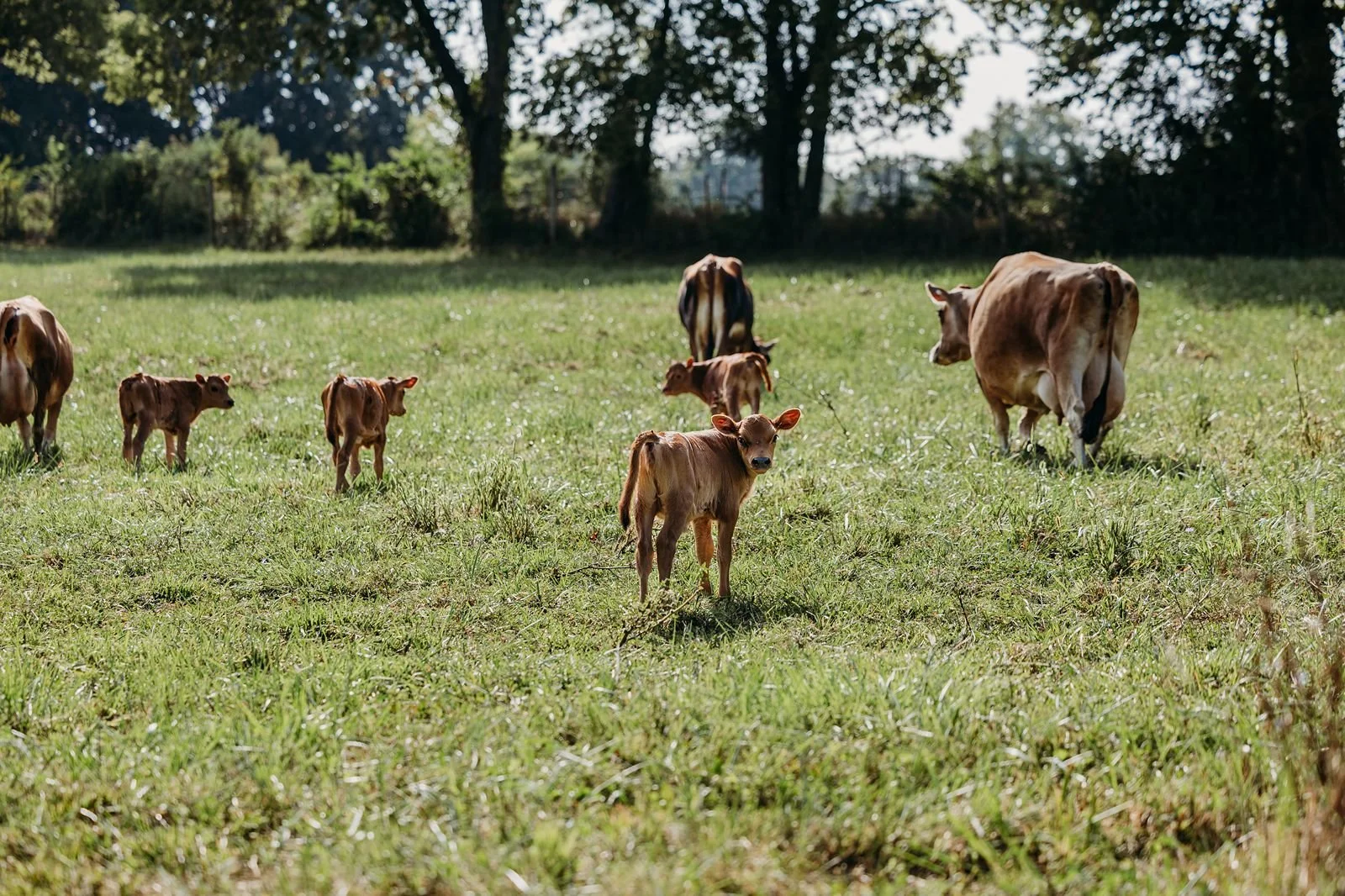
Our herd is a mix of Jersey cows (who give us our milk) and South Poll cattle (raised for beef). For about nine months of the year, they’re 100% grass-fed, grazing native grasses and forbs (broadleaf plants like clover and wildflowers). Through the winter, they live on hay and alfalfa. While they eat, they're also doing the most important job on the farm: building soil.
Their hooves trample grass and old plant matter into the ground, where worms, fungi, and microbes can break it down. And a lot of what a cow eats comes right back out the other end as manure, which feeds that same soil life.
Every mama cow raises her own calf, and we only take the milk the calf doesn’t need.
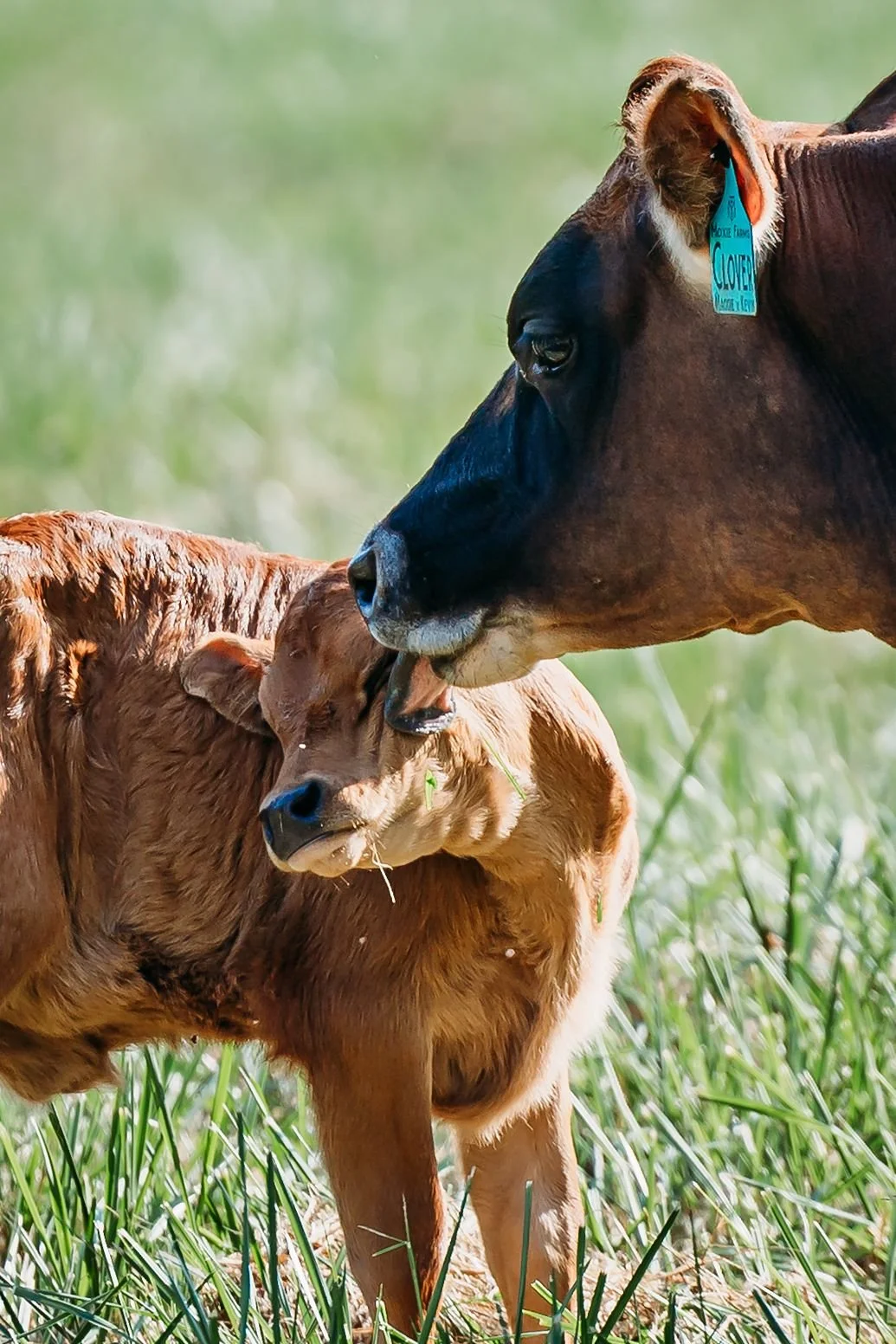
That milk does more than one thing. Most of it goes home with our member families, but some goes to the pigs and chickens, and every so often, we spray some out over the pastures, where it becomes food for the microbes in the soil.
The way a cow eats is another reason we let them go first. A cow has no top front teeth, so instead of biting grass off right at the ground, she wraps her tongue around a bundle of it and tears it off. That means she leaves more of each plant standing, so its roots stay strong underground. And strong roots help keep the soil alive.
But cows can still overgraze a pasture if they stay too long, which is exactly why we keep them moving.
The clean-up crew: sheep, goats, and heifers
As good as cows are for a pasture, they leave two problems behind them.
First, they’re picky eaters. They go for the grasses and plants they like best (or those they need most to feed their calves) and walk right past the rest. Over time, whatever they skip can take over a pasture.
The second problem is at the fence. We have a regular woven-wire fence along the farm’s perimeter, and a single strand of electric wire inside it to keep the cows from leaning on it. That electric wire works almost too well. Our cows won't graze anywhere near it, which leaves a strip a foot or two wide where grasses and weeds grow unchecked. Without using herbicides (which just isn’t an option for us), the only way to keep it down ourselves would be to walk the fence of an 80-acre farm with a weed whacker, over and over again.
That's where the clean-up crew comes in.
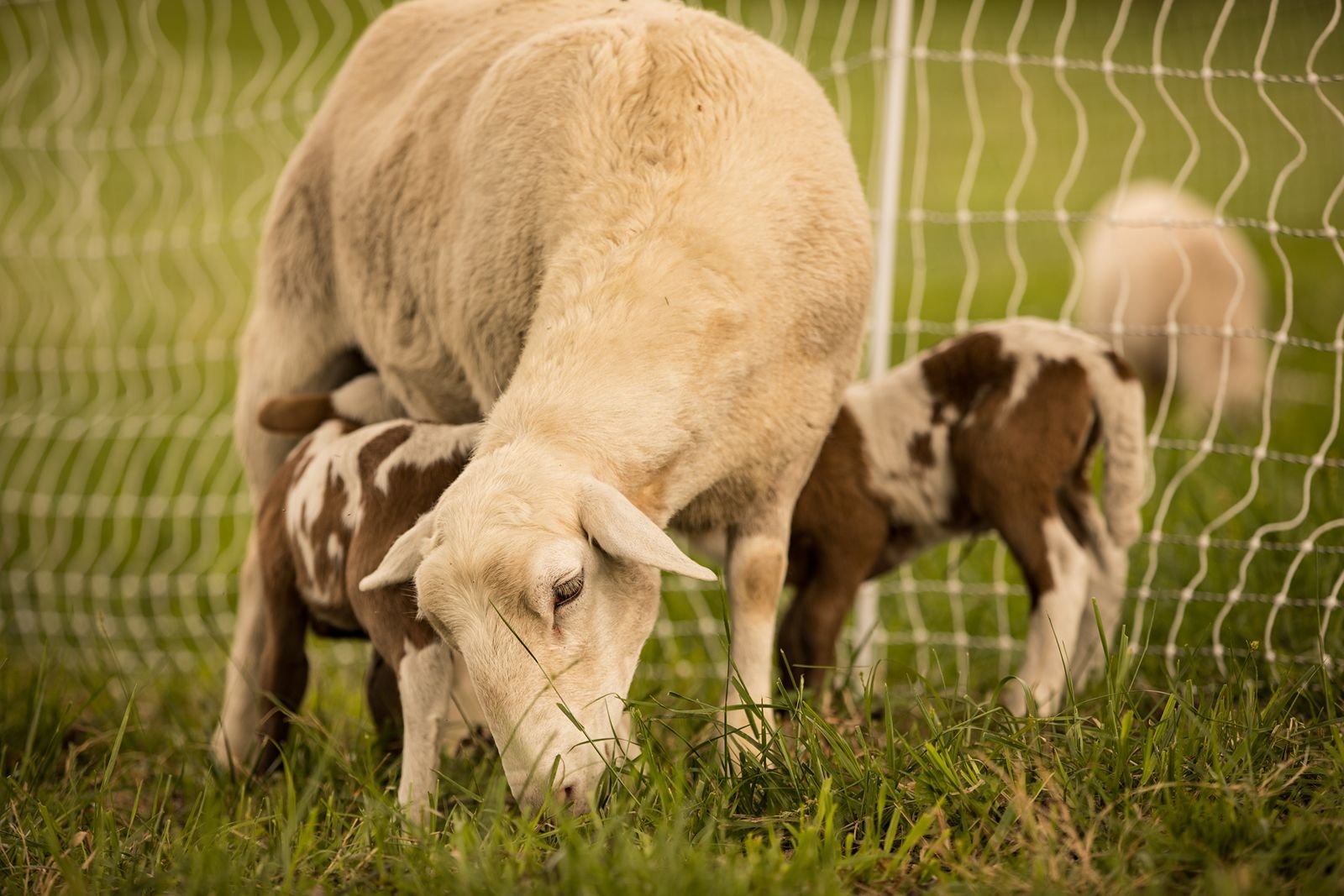
The sheep were some of the first animals we brought in for this job. They're Katahdins, a breed of hair sheep (they shed their coats instead of needing shearing) that does well in our Missouri weather.
Sheep eat very differently from cows. With their small mouths and split upper lip, they can graze much closer to the ground and pick out small plants a cow can't easily get to. They also don't mind the electric wire one bit. So they work their way right up under it and trim that strip along the fence right down.
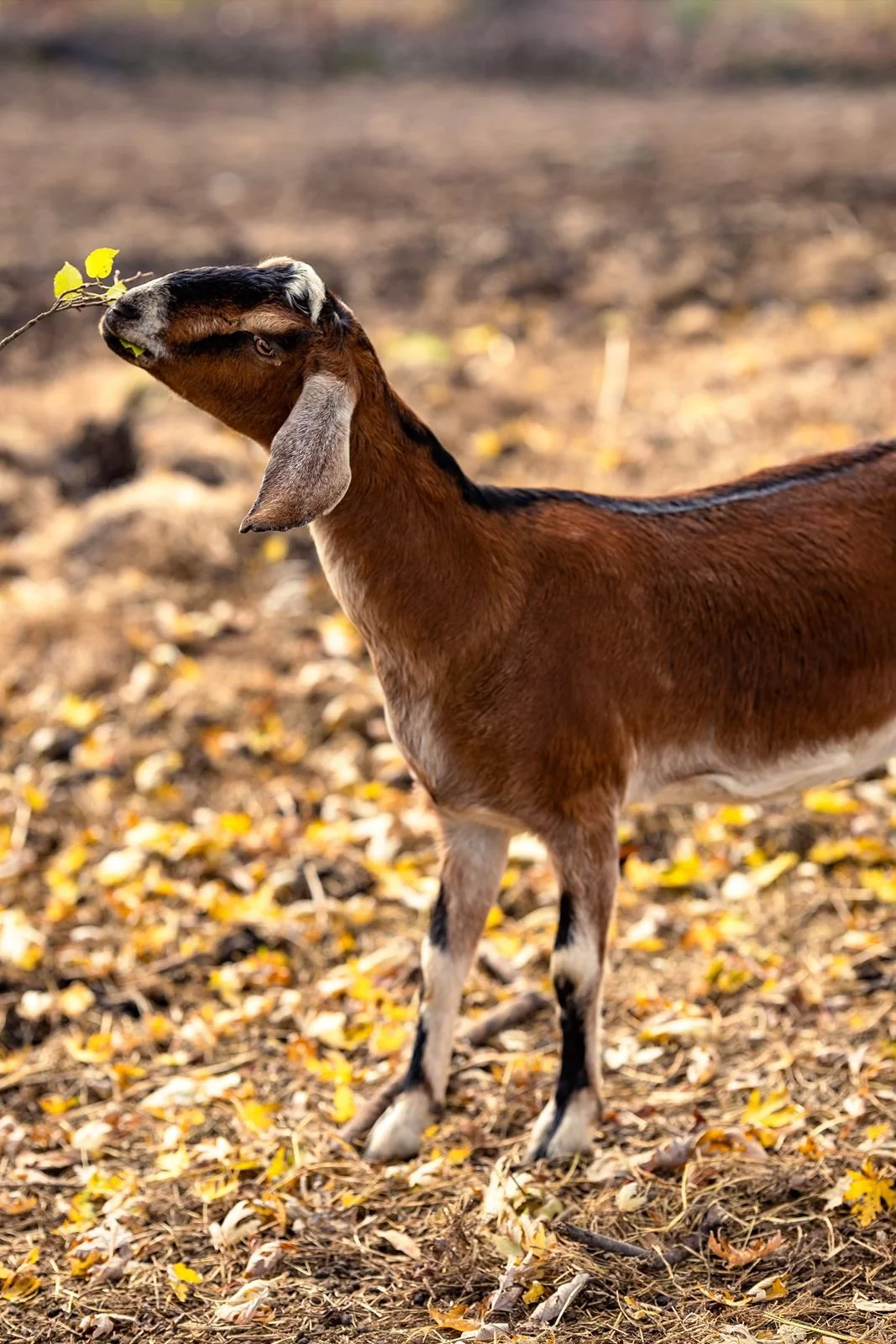
The goats take care of what the sheep won't eat. They'd rather reach up for leaves, brambles, and brush than graze grass, so they go after the woody stuff, poison ivy included. Goats are their own kind of special, but they're incredibly good at this job.
Goats are our answer to sericea lespedeza, an invasive plant that takes over pastures here in Missouri. Cattle won't eat it because of its bitter taste and woody stems, and plenty of farmers spray whole pastures with herbicide to get rid of it. Goats, on the other hand, think it's delicious. They eat it down again and again, until the roots run out of energy and the plant stops coming back. The goats get something out of it too: the tannins that make lespedeza so bitter can act as a natural dewormer.
The heifers are part of this crew, but they aren't here because they're great at clean-up. A young cow without a calf needs less nourishment than a mama cow, so she does just fine on what's left after the mamas have had their pick. While the sheep and goats handle the detail work, the heifers keep the regular grass in check.
All three leave plenty of manure behind, so the soil building doesn't stop when the animals move on.
The pest patrol: birds
Wherever cows go, flies follow. Horn flies, one of the most common cattle pests, lay their eggs in fresh manure, so every cow pie in a pasture is a nursery for the next round of flies.
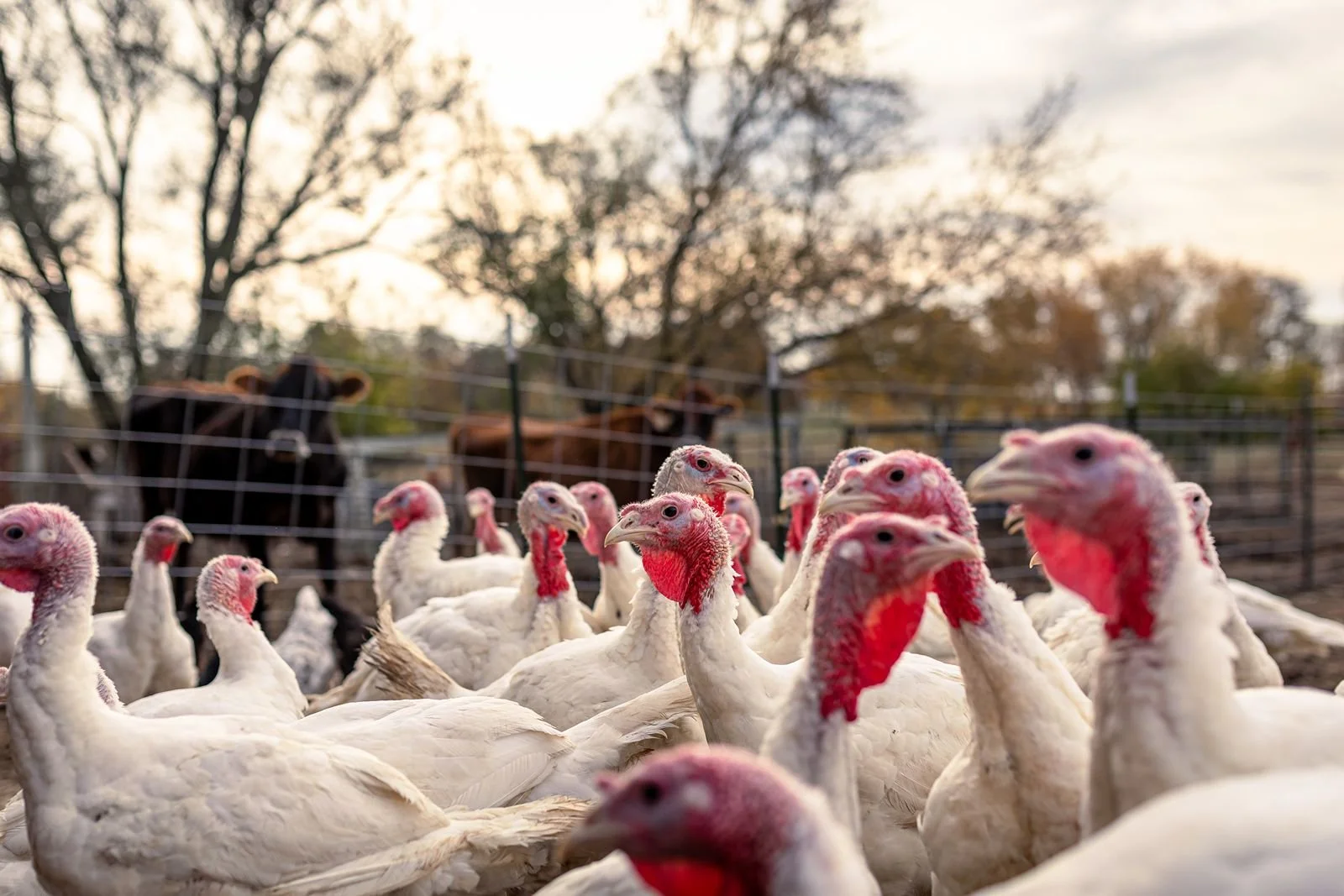
That's why our chickens and turkeys come through after the other animals. They scratch through the cow pies, eat the fly larvae, and spread the manure out so it dries before more flies can hatch. Fewer flies means more comfortable cows, with no fly spray needed. The chickens didn't come to the farm for their eggs. They came for this.
When the weather brings on an extra-big wave of flies, we send the ducks out with the cattle as reinforcements. They go after flies with even more enthusiasm than the chickens, plucking them off the cows' bellies. Watching a duck work its way along the underside of a cow is one of the funniest sights on the farm.
To help the birds, we release fly parasites: wasps so small you'd hardly notice them. They lay their eggs inside fly pupae (the stage between maggot and fly), so a wasp hatches instead of a fly. They don't sting people or animals. Flies are all they're after.
The turkeys and guinea fowl cover a lot of ground in the woods and pastures, and ticks are high on their list of favorite snacks. A livestock guardian dog goes along with them to protect them from predators (more about the dogs below).
The birds also fertilize as they go. Their manure is concentrated and rich in nitrogen. A wedge of pasture where the chickens spend time at the end of one season comes back noticeably richer the next.
The orchard, the berries, and the gardens
Away from the pastures, the animals also help look after our fruit and vegetables.
In the orchard, the sheep and goats clean up fallen fruit. An apple left rotting on the ground is an open invitation for pests, so every one they eat helps break the cycle before the next generation of insects gets going. We bring poultry through the orchard at certain times of year for the same reason.
In the berry patch, Japanese and June beetles can strip a blackberry or raspberry plant almost bare and ruin the fruit. So during beetle season, we put electrified netting around the berry canes and move a small group of ducks in with them. And we get duck eggs out of the deal too.
In the gardens, we grow some plants called “trap crops” purely as bait. Squash bugs, for example, prefer Blue Hubbard squash to other kinds, so we plant it to draw them away from our zucchini. We keep the squash under netting and let the bugs pile on. Once it's crawling with them, we pull back the netting and let the birds in. They are absolutely thrilled about it.
Then there are the bees. Our apples, pears, peaches, berries, and a long list of vegetables all depend on pollinators, and that's the job our honeybees came for. For their first four years on the farm, nobody touched their honey. We wanted them to go into every winter with more than enough stored away.
Bees aren't the only insects on our side. Beneficial insects like ladybugs and lacewings eat the aphids, mites, and caterpillars that would otherwise go after our crops. A spray would wipe out the good bugs along with the bad. Instead, we grow plants that give the good ones food and shelter, so they stick around.
The hogs
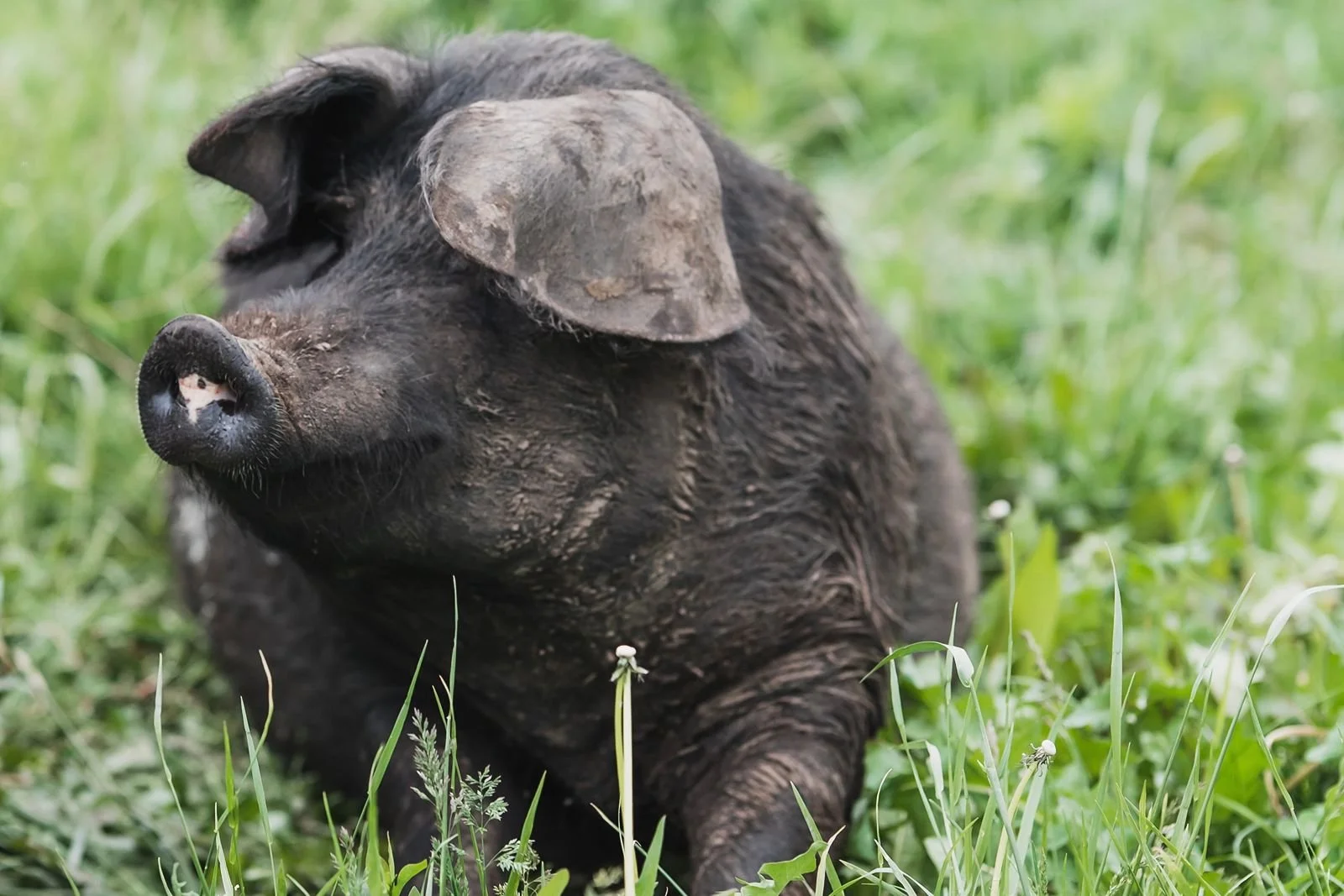
Our hogs spend most of their time in the woods along the edge of the farm. Their paddocks are full of oak and hickory trees, and we move them from one paddock to the next so no area gets overused. Acorns are a favorite, but they're not the only thing the hogs get to eat.
The backup crew
The hogs are trained to electric fencing, so we can bring them out onto the open pastures whenever a spot needs extra help. Once they're done, we take them back to the woods. They're our backup crew.
Most often, we call them in for Johnson grass, an invasive plant that Missouri lists as a noxious weed. It spreads through underground stems called rhizomes, which keep sending up new shoots. That makes it notoriously hard to get rid of, even with herbicides. It can also be dangerous for cattle. Under certain conditions, especially drought, it can build up compounds that are poisonous to them.
Hogs love those rhizomes. Turn them loose in a patch of Johnson grass, and they'll dig out every last one.
There's a catch, though: not every hog knows how. You can't take one that's never seen it done, put it in a weedy pasture, and expect miracles. They have to learn from other hogs.
The hogs deal with the occasional patch of thistles that blows in, too, which gives us one less reason to reach for a weed whacker.
Where the leftovers go
The hogs are a big part of why so little goes to waste on our farm.
Cheesemaking leaves behind a lot of whey, and our pigs are more than happy to drink it. It's an old tradition. In northern Italy, whey from making Parmigiano Reggiano has fed the pigs that become Prosciutto di Parma for centuries.
We time our pigs' litters to arrive when we're making the most cheese, so there's plenty of whey for the growing piglets. A second round of litters arrives in time for apple and winter squash season.
The hogs' final weeks before harvest work the same way. That's when they get the season's leftovers: bruised apples in the fall, extra greens in the spring, and whatever else didn't make the cut for our members. They also get vegetable scraps from the garden and the plants that are done producing, like green beans at the end of their run. You can taste it in the pork.
The security team: dogs and predators
The dogs aren't livestock, but they work just as hard as the rest of the animals on the farm.
Livestock guardian dogs
Our livestock guardian dogs live with the birds full-time. They're bred to bond with the animals they protect and keep predators away by making it clear the area is theirs. Their size, barking, and constant patrolling are usually enough to send a coyote looking elsewhere. A good guardian dog doesn't go out hunting coyotes or foxes. It stays with its flock and keeps a perimeter around it.
Terriers
Our terriers handle the moles and rabbits. During the weeks when deer could do serious damage in the orchard, we keep dogs there. Their presence alone is enough to hold the deer at a distance.
Even predators have a job to do
Many farmers hunt coyotes, deer, raccoons, and other wildlife on a regular schedule to bring their numbers down. We'd rather put the predators to work. Coyotes and foxes keep the rabbits and other small animals in check. Take the predators out, and you create an imbalance somewhere else. So they stay part of the system, and the dogs make sure they do their job somewhere other than in our chicken flock.
How it all fits together
None of these animals works alone. Take one away, and weeds, pests, or predators move into the gap it leaves.
Milk, eggs, honey, and meat are essential to us and to the families we feed, but they're the result of everything else working well, not the goal we start from.
We learned early on that if you look after the land and give every animal a job it's suited for, that land will feed a lot of people very well.
If you’d like to know more about the thinking behind all of this, you can read our post on regenerative farming at Moxie Farms.